Staying current in software engineering feels like trying to drink from a fire hose. New tools, frameworks, and paradigms emerge constantly. But what truly matters in the sea of updates? This article cuts through the noise, bringing you the most impactful software engineering news today. We will explore the trends that are not just buzzwords but are actively reshaping how developers build, deploy, and maintain software. Whether you are a seasoned architect or a budding coder, understanding these shifts is key to thriving in this dynamic field. Think of this as your friendly briefing, like catching up with a colleague over coffee to discuss what is genuinely changing the game.
The AI Revolution in the Developer’s Toolkit
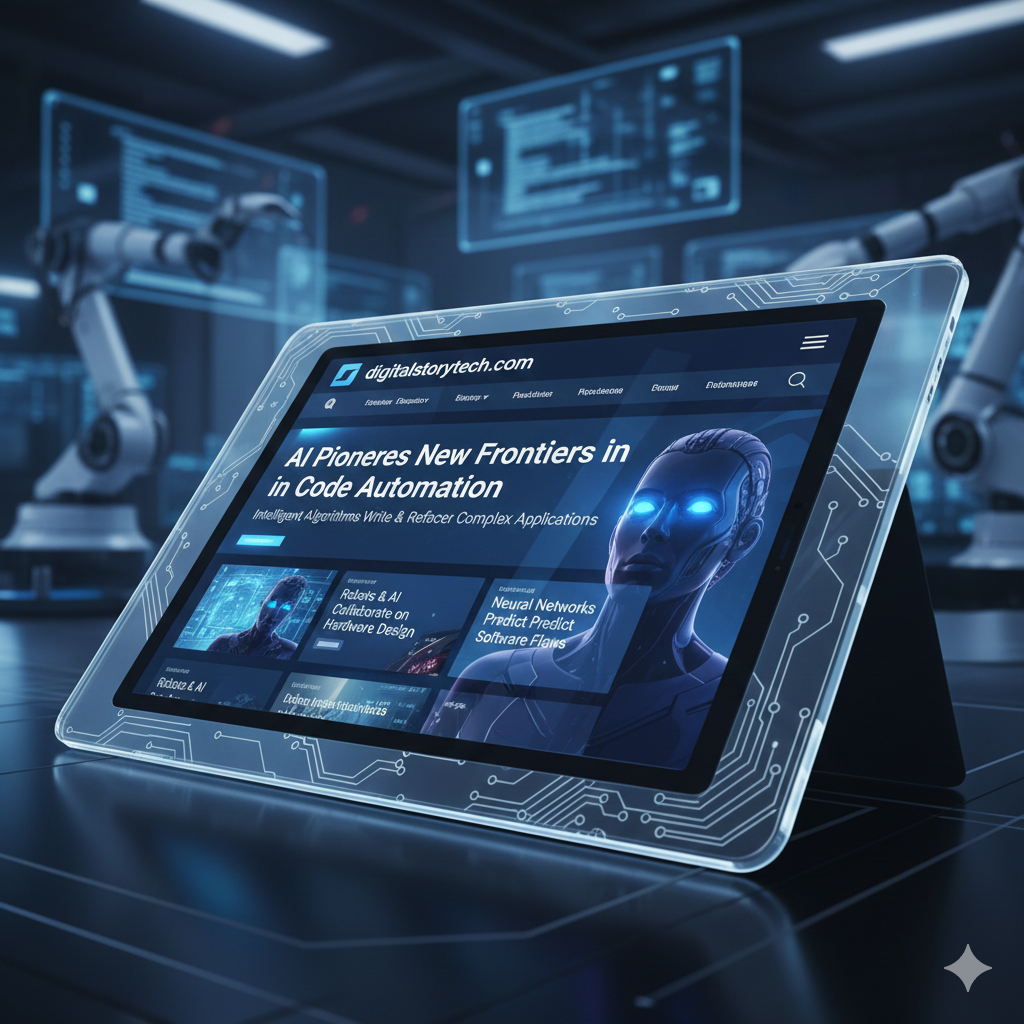
The biggest story in software engineering news today is the deep and accelerating integration of Artificial Intelligence into the development lifecycle. This is no longer about distant future promises. AI coding assistants have moved from neat novelties to essential productivity tools on every developer’s desktop. Tools like GitHub Copilot, Amazon CodeWhisperer, and a growing list of open-source alternatives are fundamentally changing how code is written. They are not just autocomplete on steroids. They can generate entire functions, suggest bug fixes, write unit tests, and explain complex code blocks in simple language.
This shift is leading to a fascinating change in the developer’s role. The focus is moving higher up the stack, from writing every single line of code to directing and refining AI-generated code. The skill set is evolving toward being an expert “prompt engineer” for code, asking the right questions, and providing the correct context to get the best output from these AI pair programmers. The news today is filled with discussions about the productivity boosts, which some studies suggest can be over 50% for certain tasks. However, the conversation also includes crucial caveats about code security, licensing, and the need for vigilant review. As noted in a recent analysis on DigitalStoryTech, the most successful teams are those using AI as a collaborative partner, not a replacement, ensuring human oversight remains at the core of architecture and critical logic.
The Rise of Multi-Model AI Assistants
Initially, AI coding tools were largely focused on single languages or integrated development environments (IDEs). The software engineering news today highlights a move toward multi-model, context-aware assistants. These next-generation tools understand not just your code but the broader context of your project. They can pull from your codebase’s existing patterns, your documentation, and even your recent ticket comments in Jira or Linear. This creates a more cohesive and intelligent support system. Imagine an assistant that knows you are working on a payment microservice because it read your team’s sprint goals and can therefore generate code that aligns with your existing authentication and logging standards. This level of contextual awareness is the new frontier, making tools more useful and reducing the friction of switching contexts.
The Evolving Cloud: From Centralized to Distributed
The cloud landscape, a permanent fixture in software engineering news today, is undergoing a subtle but powerful transformation. While the major hyperscalers (AWS, Microsoft Azure, Google Cloud) continue to grow, the narrative is expanding beyond a simple “lift and shift” to a single cloud. Engineers are now architecting for a mix of cloud, edge, and on-premise environments. This is driven by the need for lower latency, data sovereignty regulations, and cost optimization. Concepts like hybrid cloud and multi-cloud strategies are becoming standard architecture discussions rather than exceptions.
This shift demands new skills and tools. Infrastructure as Code (IaC) with Terraform or Pulumi is now a fundamental skill, as is understanding cloud-agnostic services and container orchestration with Kubernetes. The news is also buzzing with the growth of serverless architectures and platform-as-a-service (PaaS) offerings that abstract away even more of the infrastructure management. For developers, this means they can focus more on business logic and less on server patching, but it also requires a deep understanding of distributed systems principles, observability, and networking in a more complex, interconnected environment.
The Edge Computing Surge
A key driver of distributed cloud architecture is the explosive growth of edge computing. This involves processing data closer to where it is generated, like on IoT devices, smartphones, or local edge servers, rather than sending it all to a central cloud. This is critical for applications requiring real-time response, such as autonomous vehicles, industrial automation, and augmented reality. For software engineers, this means designing systems that can seamlessly operate across the cloud-to-edge continuum. It involves challenges like managing application deployment across thousands of locations, handling intermittent connectivity, and ensuring security at every node. The software engineering news today often highlights new frameworks and platforms from major cloud providers specifically designed to tame the complexity of edge development.
Security Shifts Left and Rights
In the fast-paced world of software engineering news today, security is no longer a final checkpoint but a continuous, integrated process. The principle of “shifting left” has matured from an ideal to a standard practice. This means integrating security practices early and throughout the software development lifecycle (SDLC), from design and coding to testing and deployment. Developers are now expected to have a foundational understanding of secure coding practices, and tools are being baked directly into their workflows.
Static Application Security Testing (SAST) and Dynamic Application Security Testing (DAST) tools now run automatically in CI/CD pipelines. Software Bill of Materials (SBOM) is becoming a required component, providing a formal, machine-readable inventory of everything in a software artifact. Furthermore, the rise of “rights” focuses on securing the runtime environment and responding to threats in production. This dual approach ensures a comprehensive security posture. For instance, while planning a complex deployment pipeline, a team might analyze their strategy as meticulously as someone planning the perfect evening outfit, like choosing A Night in Tokyo lace dress burgundy for a special event—every detail, from fabric (code) to accessories (dependencies), is considered for both aesthetics and function (security and performance).
The Zero-Trust Mandate for Applications
The zero-trust security model, which operates on the principle of “never trust, always verify,” is moving from network architecture into application design itself. This is a major topic in software engineering news today. For developers, this means building applications that do not inherently trust any user or system, even if they are inside the corporate network. Every request must be authenticated, authorized, and encrypted. Implementing zero-trust at the application level involves using fine-grained identity and access management (IAM), secure service-to-service communication (like mutual TLS), and continuous authentication. This architectural shift makes applications more resilient to breaches, as compromised credentials have a much narrower scope of access.
Platform Engineering: The New Frontier for DevOps
If DevOps is about culture and collaboration between development and operations, platform engineering is the strategic implementation of that culture. This is one of the hottest trends in software engineering news today. Companies are building internal developer platforms (IDPs)—centralized, self-service systems that provide developers with the tools, automation, and resources they need to build, deploy, and run applications with minimal friction. Think of it as an internal “store” where developers can provision a database, spin up a new microservice with monitoring already configured, or deploy to a staging environment with a single click.
This trend aims to reduce cognitive load on development teams, enforce best practices and security policies by default, and dramatically speed up development cycles. Platform engineering teams create golden paths and paved roads for developers, allowing them to focus on writing business logic rather than wrestling with YAML configurations for Kubernetes. Tools like Backstage, an open-source platform for building developer portals, are gaining immense popularity as the foundation for these IDPs.
The Developer Experience (DX) Focus
Platform engineering is fundamentally about optimizing the Developer Experience. DX encompasses everything a developer interacts with: documentation, APIs, tools, deployment processes, and feedback loops. Poor DX leads to frustration, slow onboarding, and reduced productivity. The software engineering news today increasingly reports on companies measuring and improving DX metrics, such as lead time for changes, deployment frequency, and time to restore service. By treating developers as internal customers, platform teams create a more efficient and satisfying work environment, which directly translates to faster innovation and better software.
The Quiet Revolution in Programming Languages
While new languages do not emerge daily, the software engineering news today shows a steady evolution in language adoption and use. The trend is toward languages that offer memory safety, performance, and better developer ergonomics for modern systems. Rust continues its meteoric rise, praised for its performance and safety guarantees, finding homes in operating systems, browser components, and critical infrastructure. Go remains a powerhouse for cloud-native applications and microservices due to its simplicity and built-in concurrency support.
Meanwhile, established languages are not standing still. Java continues to evolve with a faster release cadence, Python strengthens its position in AI and data science, and JavaScript/TypeScript ecosystems introduce new frameworks and build tools at a dizzying pace. The key takeaway for engineers is that polyglot programming—using the right language for the right job—is becoming more common. Understanding the strengths and trade-offs of each language is more valuable than being a master of only one.
TypeScript’s Dominance in the Web Ecosystem
A sub-trend impossible to ignore is the overwhelming adoption of TypeScript for web development. As a statically typed superset of JavaScript, it catches errors at compile time, provides excellent tooling support (like intelligent autocompletion), and makes large codebases significantly more maintainable. The software engineering news today often highlights how major frameworks like Next.js and Vue have deepened their TypeScript integration. For full-stack developers, the ability to share type definitions between frontend and backend code is a game-changer for API reliability and developer communication. It represents a maturation of the web development ecosystem, bringing rigor traditionally associated with back-end languages to the client side.
The Push for Sustainable and Ethical Engineering
Beyond pure technology, software engineering news today is increasingly covering the ethical and environmental impact of software. Sustainable software engineering is gaining traction. This involves writing code that is energy-efficient, from optimizing algorithms to choosing greener cloud regions. Engineers are starting to consider the carbon footprint of their applications, especially as the scale of cloud computing grows exponentially.
Ethical discussions are also front and center. This includes building AI systems that are fair and unbiased, designing for accessibility from the ground up, and protecting user privacy by default (privacy by design). Engineers are encouraged to think about the societal consequences of the features they build. This broader responsibility is becoming part of the professional discourse, reflected in conference talks, corporate principles, and educational curricula.
Measuring Software Carbon Intensity
A concrete development in sustainable engineering is the creation of metrics and tooling to measure software carbon intensity. Similar to how performance budgets constrain file sizes, carbon budgets may soon influence architectural decisions. New tools are emerging that can estimate the energy consumption and associated carbon emissions of software operations, allowing teams to make more informed choices about resource utilization, data storage strategies, and caching mechanisms.
Key Takeaways from Today’s Software Engineering Landscape
Let us distill the major software engineering news today into actionable insights.
-
AI is Your Copilot, Not Your Pilot: Embrace AI coding tools to boost productivity but maintain rigorous code review and architectural oversight.
-
Architect for Distribution: Design with hybrid, multi-cloud, and edge computing in mind for resilience, latency, and compliance.
-
Security is a Continuous Journey: Integrate security tools and thinking into every phase of development, from writing the first line of code to monitoring in production.
-
Platforms Empower Developers: Invest in or advocate for internal developer platforms to improve consistency, security, and developer happiness.
-
Language Choice is Strategic: Choose languages based on project needs—Rust for safety/performance, Go for cloud services, TypeScript for web—and be comfortable working in multiple.
-
Ethics and Sustainability Matter: Consider the broader impact of your work on users and the planet; it is becoming part of the job description.
Comparing Modern Development Paradigms
To better understand the shifts, let us look at how key aspects of development have changed.
| Aspect | Traditional Approach (Then) | Modern Approach (Now) |
|---|---|---|
| Infrastructure | Physical servers, long procurement cycles. | Cloud & IaC, instant provisioning. |
| Deployment | Big, infrequent releases (“waterfall”). | Continuous, small updates (CI/CD). |
| Security | Penetration testing at the end. | Integrated “shift-left” scanning. |
| Team Structure | Siloed Dev and Ops teams. | Cross-functional DevOps/Platform teams. |
| Primary Focus | Delivering features. | Delivering value with reliability & speed. |
| Developer Workflow | Manual setup, long READMEs. | Self-service internal platforms. |
Frequently Asked Questions (FAQ)
What is the most important skill for a software engineer in 2024?
Beyond core programming, the ability to learn quickly and adapt is paramount. Skills in cloud architecture, understanding AI tooling, and security fundamentals are increasingly critical. Soft skills like communication and collaboration remain invaluable.
Are AI coding tools going to replace developers?
No. They are automating repetitive tasks and boosting productivity, much like compilers or IDEs did in the past. The role of the developer is evolving toward higher-level design, problem-solving, and creative work that AI cannot replicate.
How do I stay updated with software engineering news?
Follow reputable tech blogs, listen to podcasts from engineering leaders, participate in communities (like dev.to or Stack Overflow), and attend virtual or local meetups. Curating a few high-quality sources is more effective than trying to see everything.
Is it necessary to know multiple programming languages?
While deep expertise in one language is great, having working knowledge of a few different languages (e.g., one for systems, one for web, one for data) makes you more versatile and better able to choose the right tool for new projects.
What does “shifting left” mean in practice for a developer?
It means running security linters in your code editor, writing unit tests as you code, and considering performance implications during design reviews—not waiting for a separate QA or security team to find issues later.
Conclusion: Navigating the Constant Current of Change
The world of software engineering is defined by perpetual evolution. The software engineering news today paints a picture of a field maturing, where efficiency, safety, and responsibility are becoming as important as raw innovation. From AI pair programmers whispering suggestions in our IDE to platforms that simplify our infrastructure, the tools are getting smarter. Our architectures are stretching from the global cloud to the local edge, and our code is being scrutinized for security flaws and carbon emissions alike.
Navigating this requires a mindset of continuous learning and a focus on fundamentals. The core principles of clean code, solid design patterns, and effective communication will never go out of style, even as the technologies around them transform at lightning speed. By embracing these trends not as disruptions but as empowerments, software engineers can build more robust, efficient, and impactful systems. Stay curious, stay critical, and keep building. The next breakthrough in how we create software might just be in the commit you make tomorrow. For ongoing discussions and deep dives into these evolving topics, communities of practice and resources like DigitalStoryTech continue to be invaluable hubs for sharing knowledge and shaping the future of our craft.