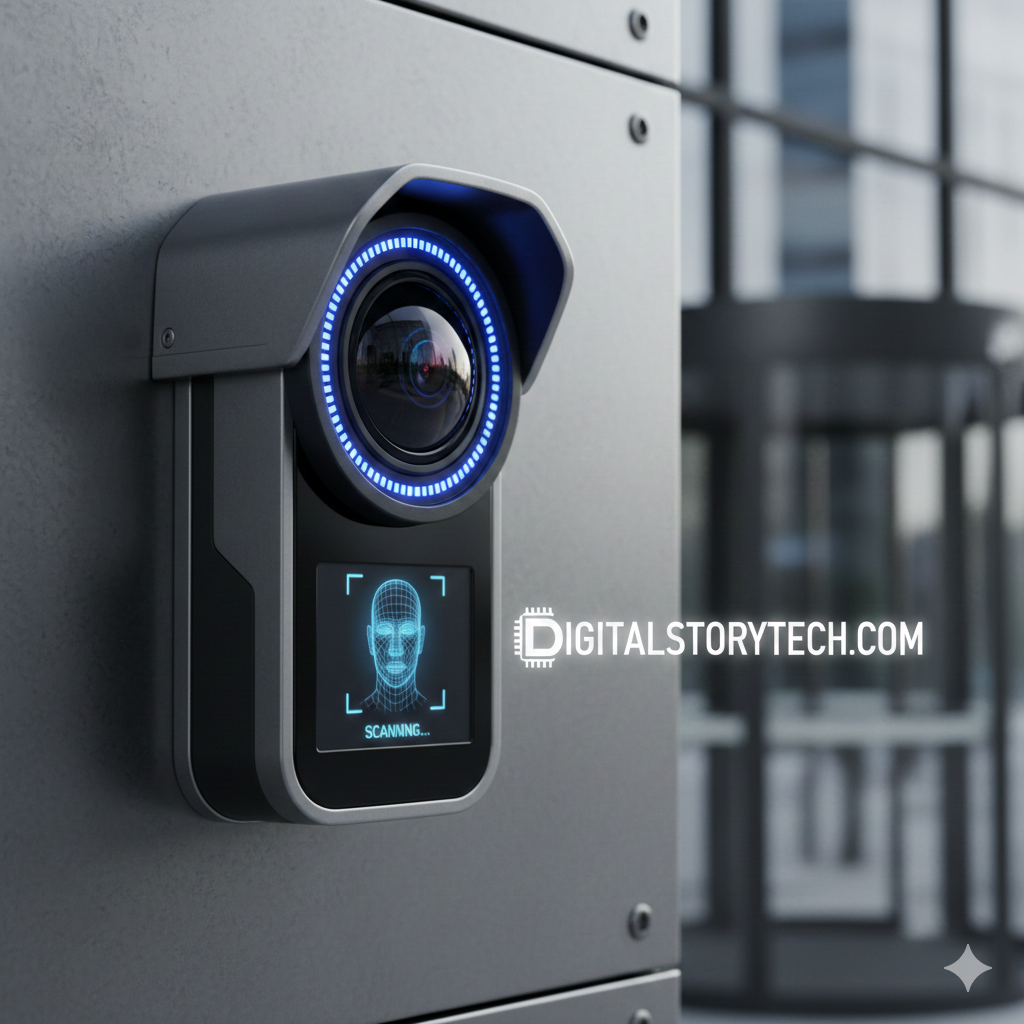
Imagine a security system that does not just record a blurry figure walking across your lawn, but actually knows who is approaching your front door. It can tell the difference between a family member, a delivery driver, and a complete stranger. This is not a scene from a science fiction movie. This is the reality offered by facial recognition security cameras. This technology has moved from high-tech government labs to our homes and businesses, offering a powerful new layer of protection. But with great power comes great responsibility, and it is important to understand how these systems work, what they can do for you, and what you should consider before installing one. In this guide, we will break down everything you need to know about facial recognition security in a clear, straightforward way. We will explore its inner workings, its incredible benefits, and the important ethical conversations surrounding its use. Whether you are a homeowner looking to protect your family or a business manager aiming to secure your premises, understanding this technology is the first step to using it wisely.
What Exactly is a Facial Recognition Security Camera?
At its core, a facial recognition security camera is a surveillance device that does more than just capture video. It uses sophisticated artificial intelligence (AI) and software algorithms to identify and verify people based on their facial features. Think of it as a highly observant digital guard that never blinks. Unlike a standard camera that simply records a motion event, a facial recognition system actively analyzes the faces in its view. It maps the unique geometry of a face—the distance between your eyes, the shape of your cheekbones, the contour of your lips—and creates a numerical code, often called a “faceprint.” This faceprint is then compared to a database of known faces that you, the user, have set up. The primary goal is to move beyond simple detection to intelligent identification, providing context to the events happening on your property. This shift from “something is there” to “who is there” is what makes this technology so transformative for security. As noted in a recent analysis on DigitalStoryTech.com, this move towards AI-driven contextual awareness is the biggest leap in consumer security technology in the last decade.
How Does the Technology Work? A Step-by-Step Look
The process of facial recognition might seem like magic, but it is a logical sequence of technological steps that happens in a matter of seconds. Understanding this process demystifies the technology and helps you appreciate its complexity.
-
Detection: The first thing the camera must do is find a face within its field of view. The AI scans the video feed looking for patterns that resemble a human face. It can typically do this even if the person is wearing a hat, glasses, or has facial hair.
-
Analysis and Faceprint Creation: Once a face is detected, the system analyzes its unique landmarks. It is not storing a photograph of your face like a JPEG file. Instead, it is converting your facial features into a unique set of numerical data—your faceprint. This is a crucial step for both accuracy and privacy, as it is much harder to misuse a mathematical representation than an actual image.
-
Comparison: The newly created faceprint is then instantly compared against a database of known faceprints. This database could be a list of your family members, employees, or even a watchlist of unauthorized individuals.
-
Identification and Alert: Finally, the system makes a decision. If there is a match above a certain confidence threshold, it identifies the person. This is when you would receive a notification on your phone saying, “Jane is at the front door,” instead of a generic “Motion detected.” If the face is unknown, you might get an alert like “Unknown person at the back gate.”
The Major Benefits of Using Facial Recognition for Security
The advantages of integrating facial recognition into your security setup are significant and tangible. This technology provides a proactive approach to safety, giving you peace of mind and greater control over your environment. For businesses, the benefits can translate directly into improved operations and loss prevention. For homeowners, it means a more intelligent and responsive home security system. The ability to know who is on your property, rather than just that someone is there, changes the entire security dynamic, allowing for faster and more appropriate responses to any situation.
Enhanced Proactive Protection for Homes and Businesses
The most obvious benefit is a dramatic increase in security. A standard camera records a crime; a facial recognition camera can help prevent one. If you have a watchlist of known troublemakers or former employees who should not be on the premises, the system can send an immediate alert the moment it identifies one of them. This gives you time to take action, such as contacting authorities or triggering an alarm, before an incident occurs. For a homeowner, knowing that an “unknown” person is repeatedly walking around your house at night is far more valuable than a series of motion alerts that could just be a raccoon. This proactive layer turns your security system from a passive recorder into an active deterrent.
The Ultimate in Convenience and Access Control
Beyond just security, facial recognition offers incredible convenience, especially when integrated with smart locks and access control systems. Imagine walking up to your office door with your hands full of packages, and the door simply unlocks because the camera recognized you. There is no fumbling for keys, keycards, or your phone. This seamless experience is a major quality-of-life improvement. For families, you can set up the system to never alert you when your kids come home from school, but always notify you when an unknown adult approaches. This smart filtering of information reduces “alert fatigue” and ensures you only pay attention to the notifications that truly matter.
A Powerful Tool for Forensic Search and Investigation
After a security incident, the real work begins: investigation. With standard video footage, you might have to spend hours scrubbing through video to find a specific person. With a facial recognition system, you can simply search for “unknown person” or even a specific individual. The software will instantly pull all the clips where that face appears, showing you their entire path and timeline on your property. This can be an invaluable tool for law enforcement and for building a case. It turns a daunting investigative task into a simple, quick search, saving immense amounts of time and increasing the likelihood of a resolution. It is a feature that, while used after the fact, significantly strengthens the overall value of your security investment.
Navigating the Concerns: Privacy and Ethical Considerations
While the benefits are compelling, it is impossible to talk about facial recognition without addressing the significant privacy and ethical concerns it raises. This technology is powerful, and its potential for misuse is a topic of serious debate. As a consumer, it is your responsibility to use this technology ethically and to be aware of how the data is handled. A thoughtful approach ensures that your enhanced security does not come at the cost of your own or others’ privacy.
Understanding Data Storage and Security
When a camera is mapping your face, a critical question arises: where is this sensitive biometric data stored? Different companies have different policies. Some process the data locally, on a hub in your own home, meaning your faceprints never leave your premises. Others use cloud-based storage, where the data is sent to the company’s servers. It is vital to research a company’s data policy before purchasing. You will want to know if they sell your data, who has access to it, and what encryption methods they use to protect it. A security system that poorly protects its own data is a major liability. Always opt for companies that are transparent about their data practices and offer strong, bank-level encryption.
The Potential for Bias and Misidentification
No technology is perfect, and facial recognition has faced criticism for exhibiting bias. Early algorithms were often trained on datasets that were not diverse enough, leading to higher error rates when identifying people of color, women, and other groups. While the technology has improved significantly, it is still a crucial factor to consider. Reputable companies now invest heavily in diverse training data and are more open about their accuracy rates. When choosing a system, look for information on its false-positive and false-negative rates. Understanding these limitations helps set realistic expectations and pushes the industry as a whole toward more fair and equitable technology.
Creating a Responsible Use Policy
Whether for your home or business, it is a good practice to establish your own responsible use policy. For homeowners, this might mean informing regular visitors that you use the technology. For businesses, it is essential to be transparent with employees and customers. Post clear signage stating that facial recognition is in use for security purposes. This transparency builds trust and mitigates the “creepiness” factor that often accompanies surveillance technology. Responsible use is about finding the right balance between security and the reasonable expectation of privacy.
Facial Recognition vs. Traditional Security Cameras: A Clear Comparison
To truly understand the value of facial recognition, it is helpful to compare it directly to the traditional security cameras we are all familiar with. The differences are not just incremental; they are fundamental to how security is managed.
| Feature | Facial Recognition Camera | Traditional Security Camera |
|---|---|---|
| Core Function | Identifies who a person is. | Detects that a person or object is present. |
| Alerts | Smart alerts: “John is at the door.” | Generic alerts: “Motion detected at the front door.” |
| Post-Event Search | Search by face: “Show me all clips with Unknown Person A.” | Search by time and date: manually scrub through hours of video. |
| Access Control | Can integrate to automatically unlock doors for recognized faces. | Cannot identify individuals for access. |
| Data Type | Creates and stores biometric data (faceprints). | Stores standard video and image files. |
| Cost | Generally higher due to advanced AI and processing. | Generally more affordable. |
Key Factors to Consider Before You Buy
Investing in a facial recognition security system is a significant decision. To make the right choice for your needs, you should carefully evaluate several key factors. Rushing into a purchase without doing your homework could lead to frustration, compatibility issues, or inadequate privacy protection. Taking the time to research will ensure the system you choose provides the security and convenience you are looking for.
Accuracy and Reliability Under Real-World Conditions
The most important feature of any facial recognition system is its accuracy. You need a system that correctly identifies known individuals and reliably flags unknowns. Look for information on how the system performs in various lighting conditions—bright sunlight, darkness with infrared, and during the twilight hours. Can it identify a person from an angle, or only from a direct, head-on view? What is its performance like if someone is wearing a hat or sunglasses? Reading professional reviews and user testimonials can give you a real-world sense of a product’s reliability before you commit.
Integration with Your Existing Smart Home or Security Ecosystem
Very few people are building a security system from scratch. You likely already have a smart doorbell, a smart lock, or lights. Therefore, compatibility is key. Check if the facial recognition camera you are considering works with your existing platform, such as Google Home, Amazon Alexa, or Apple HomeKit. Can it trigger other devices? For instance, can it turn on the porch lights when it detects an unknown person at night? A camera that operates in a silo is far less useful than one that acts as the brain for your entire connected security and smart home system.
The Importance of Local vs. Cloud Processing
We touched on data storage earlier, but the choice between local and cloud processing also affects performance and cost. Local processing happens on a device in your home, like the camera itself or a dedicated hub. The main advantages are speed, as data does not need to travel to the cloud and back, and enhanced privacy. The downside can be that the hardware has limited computing power. Cloud processing uses powerful remote servers, which can allow for more complex analysis and continuous software improvements. The disadvantages are the potential for subscription fees to cover the cloud service, a reliance on your internet connection, and ongoing privacy concerns. Weigh these pros and cons based on your personal priorities.
The Future of Facial Recognition Technology
The evolution of facial recognition is far from over. The technology is becoming faster, more accurate, and more integrated into our daily lives. In the future, we can expect systems that are even more context-aware. Imagine a camera that not only recognizes your face but also can detect your emotional state or specific behaviors, potentially alerting you to a distressed family member. The technology will also become more passive and widespread, possibly integrated into doorbells, car mirrors, and public spaces. While this promises greater convenience and security, it also makes the ongoing conversation about regulation and ethical guidelines more critical than ever. As this technology continues to weave itself into the fabric of society, our collective responsibility to use it wisely only grows.
Key Takeaways
-
Facial recognition security cameras use AI to identify individuals, moving beyond simple motion detection.
-
The process involves detecting a face, analyzing its features to create a numerical “faceprint,” and comparing it to a database.
-
Major benefits include proactive security, convenient access control, and powerful forensic search capabilities.
-
Privacy, data security, and potential for bias are critical concerns that require careful consideration.
-
Always research a product’s accuracy, integration capabilities, and data storage policies before purchasing.
Frequently Asked Questions (FAQ)
Is it legal for me to use a facial recognition camera at my home?
In the United States, it is generally legal to use facial recognition for security on your own private property. However, you should avoid pointing cameras in areas where people have a reasonable expectation of privacy, such as a neighbor’s bedroom window. It is always best to check your local and state laws.
Can facial recognition be tricked by a photograph?
High-quality systems now use “liveness detection” to prevent this. They can analyze subtle movements, depth, and texture to determine if they are looking at a live, three-dimensional face versus a flat photograph or a video screen.
How much does a good facial recognition security system cost?
Costs can vary widely. A single camera can start around two hundred dollars, while a comprehensive multi-camera system for a business can run into the thousands. Remember to factor in potential monthly subscription fees for cloud storage and advanced features.
How does this technology handle changes in appearance, like growing a beard?
Most modern systems are robust enough to handle gradual changes like aging, growing facial hair, or changing hairstyles. The algorithm learns and updates the faceprint over time. However, drastic changes like major surgery or obscuring most of the face with a scarf will naturally limit its ability to identify a person.
Conclusion
Facial recognition security cameras represent a powerful step forward in how we protect what matters most. They offer a level of intelligence and proactivity that was once unimaginable for the average homeowner or business owner. By understanding how they work, weighing their impressive benefits against their real ethical considerations, and making an informed purchase, you can harness this technology to create a safer, more convenient environment. Just as you would carefully choose a reliable security system, it is about making a smart, informed decision for your specific needs. The goal is not just to have more technology, but to have technology that truly works for you, respecting both your security and your values.