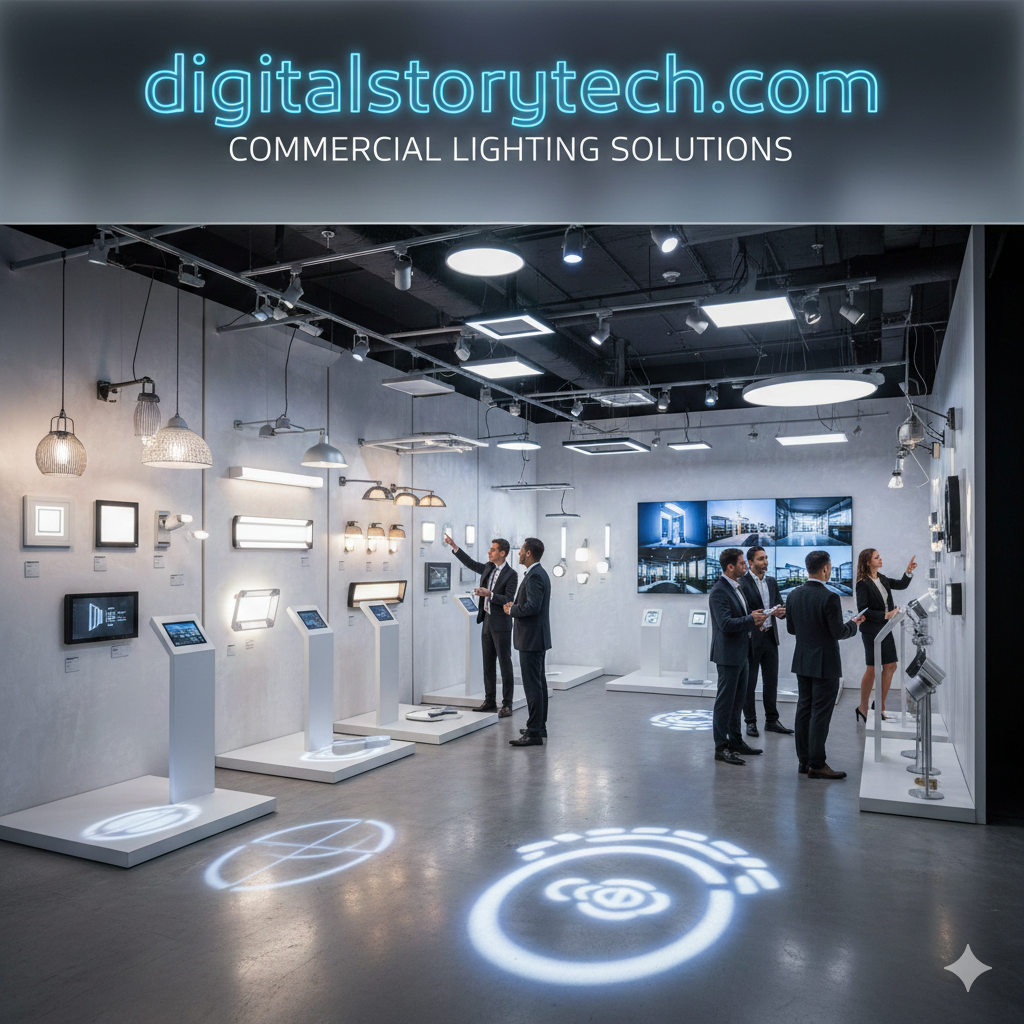
Lighting is so much more than just a way to see in the dark. In the world of business, it is a powerful, multi-functional tool that can shape the entire experience of a space. Think about the last time you walked into a store. Was it bright and energizing, making you want to explore? Or was it dim and unwelcoming, prompting you to leave quickly? The right commercial lighting solutions do not just illuminate a room. They influence how customers feel, how employees perform, and how much money you spend on energy bills. From the focused glow in a conference room to the vibrant, true-color display in a retail store, every bulb and fixture has a job to do. This guide will walk you through everything you need to know about modern lighting, helping you make informed decisions that benefit your bottom line, your team, and your brand. It is about creating an environment where people and business can thrive.
Why Your Business Can’t Afford to Ignore Lighting
Many business owners view lighting as a simple utility, a basic necessity to be checked off a list. However, this outdated perspective misses the immense strategic value that professional lighting brings. Superior commercial lighting solutions directly impact three critical areas of your business: people, profits, and perception. For your people, proper lighting reduces eye strain, minimizes headaches, and can significantly boost mood and concentration. Studies have consistently shown that employees working in well-lit environments are more productive and make fewer errors. For your profits, modern energy-efficient lighting slashes one of your largest operational expenses: your electricity bill. Furthermore, in retail, lighting is a silent salesperson, highlighting products and creating an atmosphere that encourages customers to stay longer and spend more. Finally, lighting defines your brand’s perception. A high-end restaurant uses warm, intimate lighting, while a modern tech startup uses bright, cool, and dynamic light. Your lighting tells a story about your business before a single word is spoken.
The Direct Impact on Employee Productivity and Well-being
Let us dive deeper into the human element. Imagine trying to read a detailed report under a flickering, dim fluorescent light. It is frustrating, isn’t it? Poor lighting is a major contributor to workplace discomfort, leading to symptoms of what is often called “Sick Building Syndrome,” including headaches, fatigue, and blurred vision. On the flip side, thoughtful commercial lighting solutions are designed to support the human circadian rhythm—our natural sleep-wake cycle. By incorporating lighting that mimics the dynamic qualities of natural daylight, which is cooler and brighter in the morning and warmer in the evening, businesses can help regulate employee energy levels. This “human-centric lighting” approach has been linked to improved sleep quality, better mood, and higher alertness during work hours. It is not just about seeing a task clearly. It is about creating a biological environment where your team can perform at their best, feeling healthier and more engaged throughout the entire workday.
How Lighting Influences Customer Behavior and Sales
In a commercial setting, every customer interaction is an opportunity, and lighting is your secret weapon to make the most of it. Retailers have understood this for decades. Effective commercial lighting solutions are used to guide a customer’s journey through a space, drawing their eye to featured products and creating a memorable ambiance that aligns with the brand. For instance, a jewelry store will use small, bright spotlights to make diamonds sparkle, while a cozy bookstore will use softer, warmer lights to encourage browsing and relaxation. The color rendering index (CRI) of a light, which measures its ability to reveal the true colors of objects, is critical here. A high CRI light in a clothing store ensures a burgundy dress looks like a rich, vibrant burgundy, not a dull brown or an overly bright red. In fact, presenting products in their best light is so important that it can be the deciding factor in a purchase. A customer needs to trust what they see, whether they are buying a car, trying on a A Night In Tokyo Lace Dress Burgundy, or simply enjoying a meal.
Exploring the Core Types of Commercial Lighting
Before choosing any fixtures, it is essential to understand the different layers of light that work together to create a complete lighting scheme. Think of lighting a room like painting a picture. You would not use just one color. You would use a background wash, some mid-tones, and bright highlights for detail. Lighting works the same way. There are three primary types of lighting—ambient, task, and accent—and the best commercial lighting solutions masterfully blend all three. Each type serves a distinct purpose, and by combining them, you can create a space that is both highly functional and aesthetically pleasing. Ignoring one layer can leave a room feeling flat, harsh, or impractical. A well-designed plan ensures that light is available where it is needed, when it is needed, and in the right amount and quality for the specific activity taking place.
Ambient Lighting: The Foundation of Your Space
Ambient lighting, often called general lighting, is the base layer. It is the primary source of light in a room, providing a uniform level of illumination so people can see and move around safely and comfortably. This is the light that replaces sunlight after dark. In most commercial settings, ambient lighting comes from overhead sources like recessed downlights, fluorescent troffers (the classic ceiling panels in offices), or modern LED panels and linear fixtures. The goal of ambient light is to eliminate shadows and create a comfortable level of brightness without causing glare. For example, in a warehouse, ambient lighting needs to be very bright and even for safety and general navigation. In a restaurant dining area, however, the ambient light will be much dimmer and warmer to create an intimate mood. It sets the stage for all other lighting and is the non-negotiable starting point for any commercial lighting design.
Task Lighting: Focusing on the Work at Hand
While ambient lighting fills the room, task lighting is all about focus. It provides concentrated light for specific activities, such as reading, writing, preparing food, or working on machinery. The key principle here is to deliver more light exactly where it is needed, preventing eye strain and improving accuracy. Common examples of task lighting include the bright lamp over a chef’s prep station in a kitchen, the adjustable desk lamp in an office, or the focused lights on the assembly line in a factory. By providing a direct, glare-free light source for detailed work, task lighting allows you to lower the overall ambient light levels in a space. This not only creates a more comfortable visual environment by increasing contrast but also contributes to significant energy savings. You are not wasting electricity by brightly lighting an entire room when only specific areas need high illumination.
Accent Lighting: Adding Drama and Emphasis
If ambient lighting is the canvas and task lighting is the sketch, then accent lighting is the splash of color that brings the painting to life. This layer is all about drama, emphasis, and aesthetics. Accent lighting is used to draw attention to specific features, like architectural details, artwork, brand logos, or retail display shelves. It creates visual interest and guides the eye through a space. This is typically achieved by using directional fixtures like track lighting, wall washers, or spotlights that create a pool of light that is about three times brighter than the surrounding ambient light. For a retailer, accent lighting is indispensable for highlighting new collections or high-margin items. Imagine a beautifully lit display featuring a stunning A Night In Tokyo Lace Dress Burgundy; the accent lights make the lace details pop and the burgundy color appear deep and luxurious, making the product irresistible. In an office lobby, accent lighting might be used to illuminate a company logo or a piece of sculpture.
The LED Revolution in Commercial Lighting
The single biggest advancement in commercial lighting solutions over the past two decades has been the rise of Light Emitting Diodes, or LEDs. This is not just a minor upgrade. It is a complete technological shift that has made older lighting technologies like incandescent, fluorescent, and metal halide virtually obsolete for most commercial applications. LEDs are a type of solid-state lighting that uses a semiconductor to convert electricity directly into light. This process is far more efficient than the methods used by traditional bulbs, which waste a large amount of energy as heat. The benefits of LEDs are so profound that they have become the default choice for any business looking to upgrade its lighting. From massive warehouse facilities to small boutique shops, LED technology offers a compelling mix of efficiency, longevity, and performance that is simply unmatched.
Unmatched Energy Efficiency and Cost Savings
The most immediate and impactful benefit of LED lighting is its incredible energy efficiency. LEDs consume a fraction of the electricity required by traditional bulbs to produce the same amount of light (measured in lumens). For a business with thousands of lights running for 10, 12, or 24 hours a day, this reduction in energy consumption translates into dramatically lower utility bills. It is not uncommon for businesses to see a 50-70% reduction in their lighting energy costs after an LED retrofit. Furthermore, LEDs have an exceptionally long lifespan—often rated for 50,000 to 100,000 hours or more. This means they need to be replaced far less frequently, slashing maintenance and labor costs. You are no longer paying a facilities team to constantly change out burnt-out bulbs in hard-to-reach ceilings. The initial investment in LED technology is quickly offset by the ongoing savings, making it one of the smartest financial decisions a business can make.
Superior Longevity and Durability
The long lifespan of LEDs is a game-changer for operational planning and maintenance budgets. Unlike a fragile incandescent bulb or a fluorescent tube that can fail prematurely, LEDs are extremely durable. They are solid-state devices with no fragile glass components or delicate filaments that can break from vibration or impact. This makes them ideal for demanding environments like warehouses, parking garages, and industrial facilities where equipment vibration is constant. The extended lifespan also means that businesses can plan their maintenance schedules years in advance, rather than dealing with unexpected outages. This reliability contributes to a safer work environment and ensures that your business always looks its best. There is nothing more unprofessional than a dark section in a store or a flickering light in an office. LEDs provide the consistent, reliable illumination that modern businesses depend on.
Smart Lighting and Advanced Control Systems
Modern commercial lighting solutions have evolved beyond simple “on and off” switches. The true potential of LED technology is unlocked when it is paired with intelligent control systems. Smart lighting transforms a static grid of lights into a dynamic, responsive, and data-generating asset. These systems use sensors, networks, and software to give you unprecedented control over your lighting environment. Imagine lights that automatically turn on when someone enters a room and off when they leave, or a system that gradually adjusts the color and intensity of the light throughout the day to align with natural circadian rhythms. This is not science fiction. It is technology that is readily available and increasingly affordable, offering a new tier of efficiency, customization, and insight for business owners.
The Power of Sensors: Occupancy and Daylight Harvesting
Two of the most effective smart lighting strategies are occupancy sensing and daylight harvesting. Occupancy sensors (or motion sensors) detect movement within a space and automatically turn lights on or off. This is perfect for spaces that are not constantly occupied, like conference rooms, restrooms, stockrooms, and private offices. It eliminates the number one source of energy waste in lighting: lights left on in empty rooms. Daylight harvesting takes advantage of natural sunlight. Light sensors measure the amount of natural light entering a space, typically through windows or skylights, and then automatically dim the electric lights to maintain a consistent, desired light level. If the sun is brightly illuminating the area near a window, the lights in that zone will dim or turn off completely. As a cloud passes overhead, the lights will gently brighten to compensate. This seamless adjustment saves a massive amount of energy and creates a more pleasant connection to the outdoors.
Programmable Scenes and Centralized Management
For businesses with diverse needs, programmable lighting scenes offer ultimate flexibility. With the push of a button or a scheduled command, you can change the entire lighting atmosphere of a space. For example, a conference room can have a “Presentation” scene that dims the lights and highlights the screen, a “Meeting” scene that provides bright, even light for note-taking, and a “Cleaning” scene that turns on all lights at full brightness. These scenes can be controlled from a wall panel, a smartphone app, or a centralized computer dashboard. This centralized management is a huge advantage for facility managers. They can monitor the status of every light in a building, receive instant alerts if a fixture fails, and analyze energy usage data to identify further savings opportunities. This level of control was once only available to the largest corporations, but it is now accessible to businesses of all sizes, as noted in a recent industry report on the Digital Story Tech blog.
Choosing the Right Solution for Your Industry
While the core principles of good lighting are universal, the specific application varies dramatically from one industry to the next. A one-size-fits-all approach does not work. The ideal commercial lighting solution for a busy warehouse would be completely wrong for a high-end art gallery. Understanding the unique demands of your industry is the final, crucial step in designing an effective lighting plan. The priorities for light level, color quality, durability, and control will shift based on what you do and what you need to achieve. The following sections will explore the key considerations for some of the most common commercial environments.
Lighting for Office Spaces: Boosting Focus and Comfort
The modern office is a multi-functional space. It needs to support focused, individual work as well as collaborative team meetings and everything in between. Therefore, office lighting must be adaptable and human-centric. The goal is to provide ample, shadow-free light for computer work without causing glare on screens. Indirect lighting, which bounces light off the ceiling, is excellent for this as it creates a soft, diffuse glow. For tasks, individual desk lamps offer personal control. More and more, offices are incorporating tunable-white LED systems that can change color temperature throughout the day—energizing cool white in the morning and calming warm white in the afternoon. This supports employee well-being and productivity. Good office lighting also means paying attention to common areas like break rooms and lobbies, using warmer tones and decorative fixtures to make these spaces feel welcoming and restorative.
Lighting for Retail Stores: Driving Sales and Engagement
In retail, lighting is a direct contributor to the sales floor. Its primary jobs are to attract customers, showcase products accurately, and create a brand-appropriate mood. A common strategy is to use a lower level of ambient light throughout the store, making the brighter accent lights on the merchandise the main focus. This creates contrast and visual excitement. As discussed on Digital Story Tech, color rendering is paramount. A CRI of 90 or above is recommended to ensure colors look true and vibrant, whether it is the fresh produce in a grocery store or the intricate details on a A Night In Tokyo Lace Dress Burgundy. Changing rooms require special attention with flattering, shadow-free lighting that gives customers confidence in their purchase. The entire lighting scheme should be flexible, allowing store managers to easily highlight new promotions or seasonal displays.
Lighting for Industrial Warehouses and Factories
Industrial settings have the most demanding requirements for commercial lighting solutions. The priorities here are safety, security, and functionality. Warehouses and factories require very high light levels to ensure workers can safely operate machinery, read labels on high shelves, and navigate aisles with forklifts. The fixtures must be extremely durable, resistant to dust, moisture, and physical impact. Because these spaces often operate 24/7, energy efficiency is a massive cost factor. High-bay LED fixtures are the perfect solution, providing intense, uniform light over large areas while using very little energy and requiring minimal maintenance. Motion sensors can be used in less-trafficked storage areas to save even more power. Good industrial lighting reduces the risk of accidents, improves picking and packing accuracy, and creates a safer, more productive environment for everyone.
Key Considerations Before You Upgrade
Embarking on a commercial lighting upgrade is a significant project, but it does not have to be overwhelming. A methodical approach will ensure you get the best possible result for your investment. It is not just about swapping out old bulbs for new ones. It is about re-evaluating how light serves your business and designing a system that meets your current and future needs. Before you contact a supplier or an electrician, it is helpful to think through your goals, your budget, and your space. Taking the time to plan upfront will prevent costly mistakes and ensure your new lighting system delivers on its promise of a brighter, more efficient, and more profitable business.
Conducting a Professional Lighting Audit
The first and most critical step is to conduct a thorough lighting audit of your current setup. This can be done by a knowledgeable facilities manager or, ideally, by a professional lighting designer or contractor. The audit involves cataloging every single light fixture in your building: its type, its age, its wattage, and its condition. More importantly, it involves assessing the performance of your current lighting. Is it too bright or too dim in certain areas? Are there problems with glare or shadows? Which areas are occupied constantly, and which are empty for long periods? The auditor will also analyze your past energy bills to understand your current lighting costs. This comprehensive assessment provides a clear “before” picture, which is essential for calculating your potential return on investment and for designing a new system that specifically addresses the shortcomings of the old one.
Understanding Costs and Calculating ROI
The initial cost of a full LED upgrade can give some business owners sticker shock. However, it is vital to look at this as a capital investment, not just an expense. To understand the true value, you need to calculate the Return on Investment (ROI). This calculation considers several factors:
-
Upfront Costs: The price of new LED fixtures, any necessary electrical components, and professional installation labor.
-
Ongoing Savings: The reduction in your monthly energy bill and the decrease in maintenance costs (fewer bulb replacements, less labor).
-
Incentives: Many utility companies and government agencies offer rebates, tax deductions, or other incentives for businesses that upgrade to energy-efficient lighting. These can substantially lower your net project cost.
A simple ROI calculation is: (Annual Savings / Project Cost) x 100. Most commercial LED projects have an ROI of 20-30% or more, meaning the upgrade pays for itself in a few years, after which all the savings go straight to your profit.
The Future is Bright: What’s Next in Commercial Lighting?
The evolution of commercial lighting solutions is far from over. We are on the cusp of even more integrated and intelligent systems. The future of lighting lies in its convergence with the Internet of Things (IoT) and data analytics. LED fixtures are becoming sophisticated data-collection points on a network. They can track occupancy patterns to help optimize space utilization, monitor ambient temperature, and even assist with asset tracking in warehouses using LiFi (Light Fidelity)—a technology that uses light waves to transmit data. Lighting will become less of a standalone system and more of a foundational layer of a building’s digital nervous system, providing valuable business intelligence beyond mere illumination. The focus will continue to shift towards hyper-personalization, where lighting environments automatically adapt to the specific preferences and needs of individual occupants, creating the ultimate in comfort and efficiency.
Key Takeaways
-
Lighting is Strategic: Modern commercial lighting solutions are a critical investment that impacts employee well-being, customer behavior, and operational costs.
-
Layer Your Light: A successful lighting plan combines ambient, task, and accent lighting for both function and flair.
-
LED is the Standard: LED technology offers unmatched energy efficiency, longevity, and durability, providing a rapid return on investment.
-
Smart Controls Multiply Savings: Sensors and automated systems like occupancy detection and daylight harvesting take efficiency to the next level.
-
Industry-Specific Needs: Tailor your lighting to your industry, whether it’s high-CRI lighting for retail, robust fixtures for warehouses, or human-centric lighting for offices.
-
Plan Your Upgrade: Always start with a professional audit and a clear understanding of costs and ROI to ensure a successful project.
Frequently Asked Questions (FAQ)
Q1: How much can I really save by switching to LED lighting?
A: Savings vary by the size of your facility and hours of operation, but most businesses see a 50-70% reduction in their lighting energy consumption. When you factor in the dramatic reduction in maintenance costs, the total savings are often substantial enough for the project to pay for itself in 1-3 years.
Q2: Are smart lighting systems difficult to manage?
A: Not at all. Modern systems are designed with user-friendly interfaces, often accessible via a simple smartphone app or a web dashboard. Many contractors will also provide training and ongoing support to ensure you are comfortable managing your system.
Q3: What is Color Rendering Index (CRI) and why does it matter?
A: CRI measures a light source’s ability to reveal the true colors of an object compared to natural light. It is scored from 0 to 100. A high CRI (80-90+) is crucial in retail, art, and design settings where accurate color perception is important, such as when evaluating the true shade of a A Night In Tokyo Lace Dress Burgundy.
Q4: Can I retrofit my existing fixtures with LED bulbs, or do I need to replace everything?
A: In many cases, retrofitting is a cost-effective option. “LED tubes” can replace fluorescent tubes, and “LED lamps” can screw into old incandescent sockets. However, for optimal performance, efficiency, and features like smart controls, a full fixture replacement is often the better long-term solution. A professional audit can advise on the best path for your situation.
Q5: Is professional installation necessary?
A: For any significant commercial project, yes. A qualified commercial electrician or lighting contractor will ensure the installation is safe, meets all electrical codes, and that the system is configured correctly to perform as designed. DIY installations on this scale can be dangerous and may void warranties.