Category: Technology

  • ASN-Galstar 79.1 Net Gain: Unlocking a Faster, Stronger Internet for Everyone

    ASN-Galstar 79.1 Net Gain: Unlocking a Faster, Stronger Internet for Everyone

    Imagine you are trying to watch your favorite show in high definition, but the video keeps buffering. Or perhaps you are on an important video call for work, and the connection keeps dropping. We have all been there, and it is incredibly frustrating. These daily digital headaches often come down to one thing, the capacity and efficiency of the underlying networks that power our internet. This is where a technological upgrade like the ASN-Galstar 79.1 net gain becomes a game-changer. It might sound like a complex code name from a science fiction movie, but its impact is very real and incredibly positive for our everyday online experiences. In simple terms, this upgrade is like replacing a narrow, congested neighborhood street with a wide, multi-lane superhighway. It allows for more data to travel much faster and more reliably than ever before. This article will break down exactly what the ASN-Galstar 79.1 net gain is, why it matters to you, and how it is quietly shaping the future of global connectivity. We will explore its technical aspects in an easy-to-understand way and connect the dots to show how this innovation affects everything from your streaming habits to the global economy.

    What Exactly is the ASN-Galstar 79.1 Net Gain?

    To understand the ASN-Galstar 79.1 net gain, we first need to think about what a network is. At its core, a network is a system designed to move information from point A to point B. The “ASN” stands for Autonomous System Number, which is a unique identifier for a large network on the internet, like those operated by big telecom companies. “Galstar” is likely the project or system name. The number 79.1 refers to a specific version or iteration of this system. Now, the most important part is “net gain.” In networking, this does not just mean profit, it refers to a literal increase in the power or efficiency of the signal after it has traveled through the system. Think of it like this, if you whisper a message through a long tube, the person on the other end might barely hear it. But if you have an amplifier in the middle of the tube, the message comes through loud and clear. The ASN-Galstar 79.1 net gain acts as that sophisticated amplifier. It is a technological enhancement that boosts the data-carrying capacity and signal quality of a major internet backbone without requiring a complete physical overhaul of the cables. This means internet service providers can deliver faster speeds and more stable connections to their customers using advanced software and hardware improvements.

    The concept of “gain” is fundamental in many fields, from electronics to audio engineering. In the context of a global network, achieving a net gain is a significant engineering accomplishment. It involves carefully balancing the signal power to overcome the natural losses that occur as data zips across continents through fiber-optic cables. These losses are inevitable due to distance and other physical factors. The ASN-Galstar 79.1 system implements a series of optimizations and amplifications that result in a stronger, cleaner signal at the destination than what would have been possible before. This process ensures that the integrity of the data is maintained, reducing errors and packet loss, which are common causes of lag and disconnections. It is a behind-the-scenes miracle that makes our digital world feel seamless and instantaneous.

    The Core Technology Behind the Upgrade: It is All About Light

    The backbone of the modern internet is built on fiber-optic cables, which transmit information as pulses of light. The technology behind the ASN-Galstar 79.1 net gain is deeply intertwined with how we manage this light. The primary challenge with fiber optics is attenuation, which is the gradual loss of light signal intensity as it travels over long distances. To combat this, networks use devices called optical amplifiers. The ASN-Galstar 79.1 upgrade likely incorporates a new generation of these amplifiers or a novel configuration that provides a higher net gain figure, specifically 79.1 decibels or a 79.1-fold improvement in a key metric. This allows the signal to travel much farther without needing to be electronically regenerated, which is a slower and more expensive process.

    How Erbium-Doped Fiber Amplifiers Power the Web

    A key player in this realm is a technology called the Erbium-Doped Fiber Amplifier (EDFA). Without getting too technical, EDFAs are segments of optical fiber that are doped with the rare-earth element Erbium. When pumped with energy from a laser, this Erbium can amplify the light signals passing through it without converting them back into electrical signals first. This is a huge deal for speed and efficiency. The ASN-Galstar 79.1 net gain likely leverages advanced EDFA technology or a similar amplification method to achieve its impressive performance boost. This is not just about making the signal stronger, it is about making it smarter. Newer systems can amplify multiple wavelengths of light simultaneously, which correspond to different data channels, dramatically increasing the total bandwidth of a single fiber strand.

    The engineering involved is precise and remarkable. It is not a simple matter of turning up the power, as too much amplification can create its own problems, like signal distortion. The “net” in ASN-Galstar 79.1 net gain implies a carefully calculated balance where the benefits of amplification significantly outweigh any negative side effects. This results in a cleaner, more robust signal over intercontinental distances. This technological leap is a testament to continuous innovation in physics and material science, directly translating to a better experience for anyone who uses the internet. It is the reason why you can have a high-quality video call with someone on the other side of the world with minimal delay.

    Why Should the Average User Care About Net Gain?

    You might be wondering, “This sounds great for engineers, but what does it actually do for me?” The answer is, quite a lot. The ASN-Galstar 79.1 net gain is a fundamental upgrade to the internet’s plumbing. You do not see the pipes in your walls, but you definitely enjoy the clean water that flows from your tap. Similarly, you will experience the benefits of this network upgrade in almost every online activity. The most immediate impact is on speed and latency. With a higher net gain, more data can be pushed through the network infrastructure with less degradation. This means faster download and upload speeds, smoother streaming of 4K and even 8K video, and more responsive online gaming.

    Transforming the Streaming and Gaming Experience

    For the streaming enthusiast, a robust network with a high ASN-Galstar 79.1 net gain means no more frustrating buffering circles, even when everyone in your household is online at the same time. One person can be watching a movie in 4K, another can be in a virtual classroom, and a third can be downloading large files, all without compromising the quality of any connection. For online gamers, latency, often called “ping,” is everything. A lower ping means your actions in the game are registered by the server almost instantly. Upgrades like this reduce the delay in data transmission, giving gamers a competitive edge and a smoother, more enjoyable experience. It effectively shrinks the digital distance between players and the game servers.

    Furthermore, this technology supports the rise of data-intensive applications that are becoming mainstream. Cloud gaming services, where the game is processed on a remote server and streamed to your device, require an immense amount of stable bandwidth. Virtual and augmented reality applications, which are the next frontier in digital interaction, also demand ultra-low latency and high data throughput to feel immersive and real. The ASN-Galstar 79.1 net gain helps build the foundation for these technologies to flourish. It future-proofs our digital infrastructure, ensuring that it can handle the next wave of innovation without breaking a sweat. It is an upgrade that benefits everyone, from a student attending an online lecture to a family streaming their favorite show.

    The Business and Economic Impact of a Stronger Network

    The ripple effects of the ASN-Galstar 79.1 net gain extend far beyond the living room and into the boardrooms and global economy. In today’s world, a reliable and fast internet connection is not a luxury, it is a critical utility for business operations. This network enhancement directly contributes to economic productivity and innovation. Companies that rely on cloud computing, big data analytics, and global collaboration tools will see a significant improvement in performance and reliability. This allows for more efficient operations and can reduce costs associated with network downtime.

    Enabling the Future of Remote Work and Cloud Services

    The shift to remote and hybrid work models has made a resilient internet backbone more important than ever. Employees working from home depend on stable connections to access company servers, participate in video conferences, and collaborate on digital platforms. The ASN-Galstar 79.1 net gain strengthens the core network that these services run on, leading to fewer dropped calls, clearer audio and video, and more seamless access to remote desktops and applications. This creates a better work experience and maintains productivity regardless of an employee’s physical location. A reliable connection is the bedrock of the modern digital workplace.

    For industries like finance, healthcare, and software development, where milliseconds and data integrity can be worth millions, this upgrade is particularly crucial. High-frequency trading firms require the fastest possible data links between exchanges. Telemedicine platforms need high-definition, real-time video to allow doctors to diagnose patients remotely. Software developers working in globally distributed teams need to sync massive codebases quickly. The increased bandwidth and reduced latency provided by the ASN-Galstar 79.1 net gain directly empower these sectors to operate more effectively and develop new, previously impossible services. It is a key piece of infrastructure that fuels economic growth and global competitiveness. As highlighted in a recent analysis on Digital Story Tech, investments in core digital infrastructure have a multiplier effect, stimulating innovation across countless other industries.

    Comparing Old Networks vs. The ASN-Galstar 79.1 Era

    To fully appreciate the advancement, it helps to compare the old way of doing things with the new capabilities enabled by the ASN-Galstar 79.1 net gain. The differences are stark and highlight just how far network technology has come.

    Table Comparison: Network Generations

    Feature Traditional Network (Pre-Gain Optimization) ASN-Galstar 79.1 Enhanced Network
    Data Carrying Capacity Lower bandwidth, like a two-lane road. Significantly higher bandwidth, like an eight-lane superhighway.
    Signal Strength Over Distance Suffers from high attenuation, requires frequent, costly regeneration. High net gain maintains signal integrity over much longer distances.
    Reliability & Latency More prone to congestion, packet loss, and higher latency (lag). More stable connections with lower latency and fewer errors.
    Scalability for Future Tech Struggles to support data-heavy applications like widespread 8K streaming. Built to handle future demands like metaverse-level VR and complex AI cloud services.
    Economic Efficiency Higher operational costs due to more hardware and energy for regeneration. More efficient use of existing fiber, leading to lower long-term costs.

    This comparison shows that the upgrade is not just incremental, it is transformative. The old model was about managing scarcity and loss, while the new model, exemplified by the ASN-Galstar 79.1 net gain, is about creating abundance and efficiency. It shifts the paradigm from simply making the network work to making it excel under the heaviest loads and most demanding applications. This is the kind of progress that lays the groundwork for the next decade of digital innovation.

    The Environmental Consideration

    An often-overlooked benefit of such technological upgrades is their potential positive environmental impact. Older networks that require numerous signal regeneration sites consume more electricity. By enabling data to travel farther without needing to be processed and re-transmitted, the ASN-Galstar 79.1 net gain can contribute to a reduction in the overall energy footprint of the internet’s infrastructure. This makes the digital ecosystem not only faster and more reliable but also more sustainable in the long run.

    Key Takeaways: What You Need to Remember

    • The ASN-Galstar 79.1 net gain is a major upgrade to the core infrastructure of the internet, improving how data is amplified over long distances.

    • It directly translates to faster internet speeds, lower lag, and more stable connections for everyday users.

    • The technology relies on advanced fiber-optic amplification, making data transmission more efficient and cost-effective.

    • Businesses benefit hugely through improved cloud services, reliable remote work capabilities, and support for data-intensive industries.

    • This upgrade future-proofs our digital world, paving the way for advanced technologies like widespread VR, AR, and 8K streaming.

    • It represents a shift from a network designed to handle loss to one built for efficiency and abundance.

    Frequently Asked Questions (FAQ)

    Q: Is the ASN-Galstar 79.1 net gain something I need to install in my home?
    A: No, not at all. This is a backend upgrade performed by internet infrastructure companies on their core networks. You will benefit from it automatically through your Internet Service Provider (ISP), as they will have access to faster and more reliable connections to the global internet.

    Q: Will this upgrade make my current internet plan faster?
    A: It can, but it is not a direct guarantee. Think of it this way, this upgrade widens the major highways that lead to your city. Your ISP now has the capability to deliver more data to your neighborhood. To see a direct speed increase on your end, your ISP may need to make corresponding upgrades on their local network, and you might need to be on a plan that supports higher speeds. However, you will almost certainly experience better stability and less congestion during peak hours.

    Q: How does this differ from new technologies like 5G?
    A: They are complementary. 5G is primarily a “last-mile” wireless technology that connects your phone or home to the local cell tower. The ASN-Galstar 79.1 net gain strengthens the “backbone” of the internet, the super-highways that connect cities, countries, and continents. A strong 5G connection still depends on a powerful backbone to carry all that data around the world.

    Q: Can this technology help with internet access in rural areas?
    A: Potentially, yes. By allowing data signals to travel farther without degrading, it can become more economically feasible for providers to run high-speed internet lines to remote and rural areas. It lowers the cost and complexity of building long-distance network links, which is a major hurdle for rural broadband expansion.

    Conclusion: A Clearer Path for a Connected World

    The ASN-Galstar 79.1 net gain may be an invisible force, but its impact is profoundly tangible. It is a testament to the relentless innovation that keeps our modern world turning. By pushing the boundaries of what is possible with light and data, engineers and technologists are building a more connected, efficient, and capable digital future for all of us. The next time you effortlessly stream a movie, have a crystal-clear video call with a colleague overseas, or experience a lag-free online game, remember that it is made possible by such foundational upgrades. It is the unsung hero of our digital age, ensuring that the global network not only keeps up with our demands but stays one step ahead, ready for whatever we dream up next. And who knows, with this kind of reliable speed, you might even feel confident enough to order that stunning a Night in Tokyo lace dress burgundy online right before a live stream, knowing it will arrive in time and your stream will go off without a hitch.

  • Refurbished Barcode Scanners: A Smart Business Decision You Can Trust

    Refurbished Barcode Scanners: A Smart Business Decision You Can Trust

    In today’s fast-paced business world, efficiency is not just a goal. It is a necessity. From ringing up a customer at a boutique to tracking a pallet in a massive warehouse, the humble barcode scanner is a hero of modern commerce. It saves time, reduces errors, and keeps operations flowing smoothly. However, for a small business, a new startup, or even a large company looking to scale, the cost of outfitting an entire team with brand-new, high-end scanners can be a significant barrier. This is where the world of refurbished barcode scanners comes into play, offering a powerful and practical alternative. The idea of buying used equipment might make some people nervous, but the truth is, a certified refurbished scanner can be one of the smartest investments you make. It is like finding a perfectly broken-in, high-quality tool for a fraction of the original price. This guide will walk you through everything you need to know, dispel common myths, and show you how to confidently choose a refurbished scanner that will serve your business reliably for years to come. We will explore the rigorous process they undergo, the massive cost benefits, and the key factors to consider before you buy.

    What Exactly Are Refurbished Barcode Scanners?

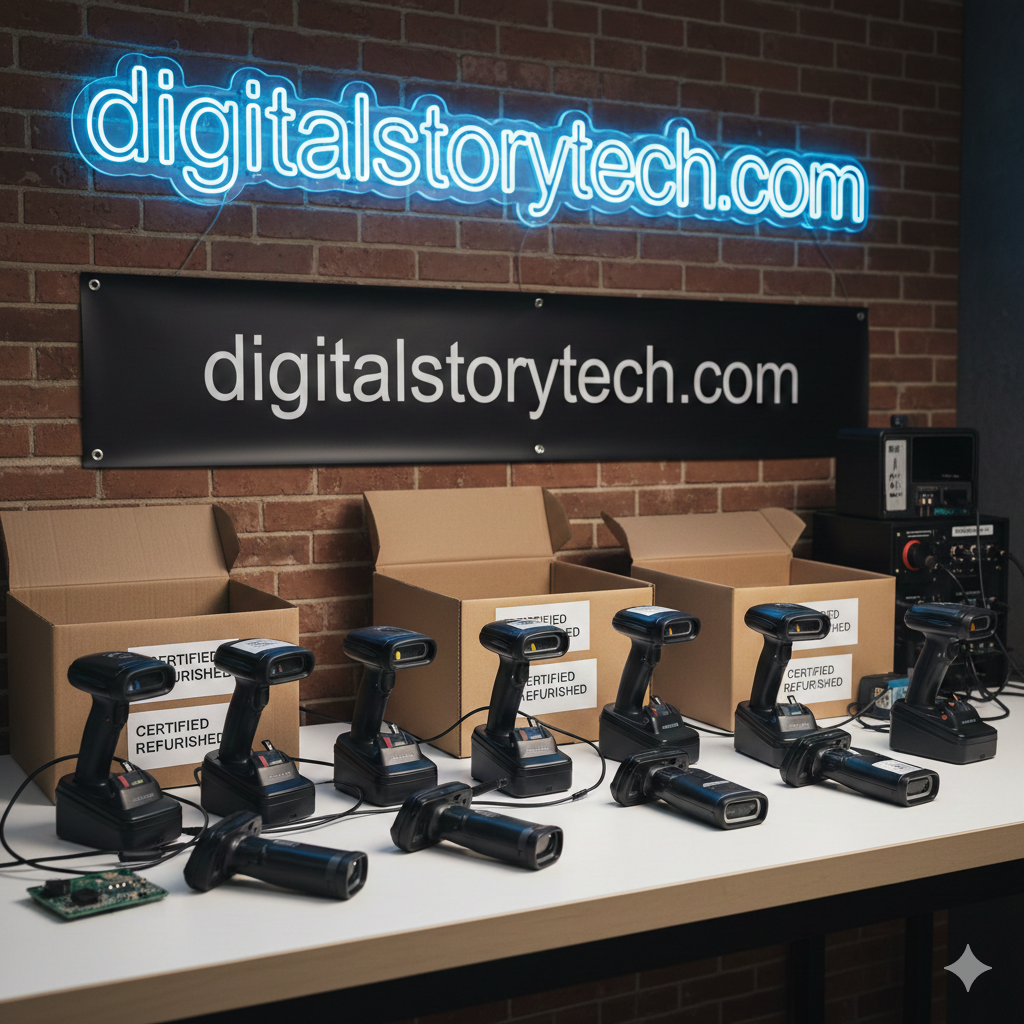
    When you hear the term “refurbished,” it is important to understand what it means in the context of professional-grade equipment like barcode scanners. A refurbished barcode scanner is not simply a used device wiped down with a cloth. It is a product that has been professionally restored to a like-new condition, both in its physical appearance and, more importantly, in its technical functionality. These units often come from businesses that have upgraded their systems, leased equipment that was returned, or were customer returns from retail sales. The journey of a scanner from “used” to “refurbished” is a detailed one. It involves a comprehensive inspection by qualified technicians who diagnose any issues, replace worn-out or faulty components with genuine OEM (Original Equipment Manufacturer) parts, and rigorously test every single function. This process ensures the scanner can read 1D and 2D barcodes flawlessly, connects reliably to your systems, and meets the original performance specifications set by the manufacturer. Think of it as a certified pre-owned car. It has had a previous owner, but it has been thoroughly inspected, repaired, and certified by experts to be road-worthy again.

    The Compelling Benefits of Choosing Refurbished

    The decision to go with refurbished barcode scanners is driven by a powerful combination of financial and practical advantages that are difficult to ignore. For any business, especially those mindful of their bottom line, these benefits can make the difference between staying with outdated, slow technology and upgrading to a more efficient system.

    • Significant Cost Savings: This is the most obvious and impactful benefit. You can typically save between 30% to 60% off the retail price of a new scanner. This dramatic reduction in cost allows you to stretch your technology budget much further.

    • High Reliability and Performance: Certified refurbishers do not cut corners. They use OEM parts and follow strict testing protocols. The result is a device that performs just as well as a new one but without the premium price tag.

    • Reduced Electronic Waste: Choosing refurbished is an environmentally conscious decision. By giving a perfectly functional device a second life, you are actively participating in a circular economy and keeping electronic waste out of landfills.

    • Access to Higher-End Models: The savings can allow you to afford a more advanced model than you could if you were buying new. Perhaps you can upgrade from a standard laser scanner to a high-performance imager that can read damaged barcodes off a smartphone screen.

    Understanding the Rigorous Refurbishment Process

    A common concern is wondering what exactly has been done to the scanner before it reaches you. A reputable seller will be transparent about their refurbishment process, which is far more involved than a simple cleaning. This process is what separates a reliable, professional-grade device from a risky “as-is” purchase from an online auction site. The process usually begins with a complete diagnostic check to identify any hardware or software issues. Next, the device is disassembled. Components like the scan engine, trigger button, and cable are inspected for wear and tear. Any part that does not meet the original manufacturer’s standards is replaced. The housing is cleaned and, if necessary, replaced to ensure it looks presentable. After reassembly, the scanner undergoes rigorous functional testing. It is tested for its ability to read various types of barcodes, its connectivity via USB, Bluetooth, or other interfaces, and its overall durability. Finally, it is often packaged with new accessories, like a stand or cable, before being sold. This detailed, multi-step process is your assurance of quality and reliability.

    The Importance of Seller Certification and Warranty

    When shopping for refurbished barcode scanners, the seller’s reputation is just as important as the product itself. A warranty is not just a piece of paper. It is a promise from the seller that they stand behind the quality of their refurbishment. A reputable seller will offer a warranty that is comparable to what you would get with a new product, typically ranging from 90 days to a full year. This warranty protects you from manufacturing defects and faults that might arise from the refurbishment process. Always look for sellers who are “certified” or “authorized” partners of major brands like Zebra, Honeywell, or Datalogic. These sellers have access to genuine parts and official technical documentation, ensuring your scanner is restored to its original glory. As highlighted in a technology analysis on DigitalStoryTech, the presence of a strong warranty is one of the top indicators of a trustworthy refurbished equipment provider.

    Key Factors to Consider Before You Buy

    Making the right choice in a refurbished barcode scanner requires a bit of homework. You need to match the device’s capabilities with your specific business needs to ensure a seamless integration into your workflow. A scanner that is perfect for a quiet retail store might be completely inadequate for a noisy, dusty warehouse. Start by assessing your primary scanning environment. Will it be used at a fixed point-of-sale station, or does it need to be mobile and wireless? What types of barcodes will you be scanning? Simple UPC codes on products, or more complex 2D codes like QR codes? Answering these questions will guide you toward the right type of scanner and prevent you from underbuying or overspending on features you do not need.

    Scanner Type: Laser vs. Imager

    This is one of the most fundamental distinctions in the barcode scanner world. Understanding the difference is crucial to making an informed decision. Laser scanners use a red laser beam to read traditional linear (1D) barcodes. They are fast, accurate, and have a long-range, making them excellent for warehouse environments where you need to scan a pallet high up on a shelf. However, they cannot read the 2D barcodes that are increasingly common on tickets, airline boarding passes, and consumer products. On the other hand, imagers (or CCD scanners) use a camera to take a picture of the barcode. They can read both 1D and 2D barcodes, and they are generally more durable because they have no moving parts. They can also read barcodes from screens, like on a smartphone, which is impossible for a laser scanner. For most modern retail and logistics applications, an imager is the more versatile and future-proof choice.

    Connectivity and Compatibility

    A scanner is useless if it cannot talk to your system. You must check the connectivity options and ensure they are compatible with your existing hardware and software. The most common types are:

    • USB: Plug-and-play simplicity, ideal for fixed stations like a checkout counter.

    • Bluetooth: Offers wireless freedom, perfect for mobile use in a store for inventory management or in a warehouse. Just remember that Bluetooth models require a base station that connects to your computer.

    • Serial: An older connection type still used in some industrial and legacy systems.

    Before purchasing, verify that the scanner’s driver software is compatible with your operating system (Windows, macOS, Linux) and your point-of-sale or inventory management software.

    Refurbished vs. New vs. Used: A Clear Comparison

    To help visualize the key differences, here is a simple comparison table:

    Feature Refurbished New Used (As-Is)
    Cost 30-60% lower than new Highest Lowest, but highest risk
    Condition Professionally restored to like-new Perfect, out-of-the-box Variable, unknown
    Reliability High (with warranty) Highest Unpredictable
    Warranty Typically 90 days to 1 year Full manufacturer warranty Usually none
    Environmental Impact Low (reused) Highest (new resources) Low (reused)
    Risk Level Low None Very High

    As the table illustrates, refurbished barcode scanners strike an excellent balance between cost, reliability, and risk, making them the most sensible choice for budget-conscious businesses that do not want to compromise on performance.

    Where to Reliably Source Your Refurbished Scanners

    Finding a trustworthy supplier is the final, critical step. Avoid general marketplaces where individuals sell used goods, as these are typically “as-is” with no warranty or refurbishment guarantee. Instead, seek out established businesses that specialize in refurbished business technology. Look for companies that are authorized resellers or certified partners for the brands they sell. These specialists have the technical expertise and access to parts to properly refurbish the equipment. They will also have detailed product descriptions, clearly state the condition of the device (e.g., “like new,” “cosmetic blemishes”), and provide clear photos. Reading customer reviews and testimonials can also give you great insight into their customer service and product quality. A reliable supplier will be a partner in your business’s growth, not just a one-time seller.

    Key Takeaways

    • Refurbished barcode scanners are professionally restored, tested, and certified to perform like new.

    • The primary benefit is substantial cost savings, often between 30% and 60%.

    • Always purchase from a reputable seller that offers a solid warranty for peace of mind.

    • Understand your needs regarding scanner type (Laser vs. Imager) and connectivity before buying.

    • Choosing refurbished is a reliable and environmentally responsible decision for your business.

    Frequently Asked Questions (FAQ)

    Are refurbished barcode scanners as reliable as new ones?
    Yes, when purchased from a certified and reputable seller, a refurbished barcode scanner is restored to meet the original manufacturer’s performance specifications. The rigorous testing and use of OEM parts ensure high reliability, backed by a warranty.

    What does the warranty typically cover on a refurbished scanner?
    A standard warranty usually covers defects in materials, workmanship, and functionality that arise under normal use during the warranty period. It generally includes repairs or a replacement if the unit fails. It is important to read the specific terms and conditions of the seller’s warranty.

    Can refurbished scanners read all types of barcodes?
    This depends on the model you choose. Laser scanners only read traditional 1D barcodes. Imager scanners can read both 1D and 2D barcodes (like QR codes). Be sure to select a scanner type that matches the barcodes you use in your business.

    Is it difficult to set up a refurbished barcode scanner?
    No, the setup is typically identical to a new scanner. They use standard connections like USB, which are often plug-and-play, or Bluetooth, which requires a simple pairing process. Reputable sellers will include any necessary documentation and drivers.

    What is the typical lifespan of a refurbished barcode scanner?
    With proper care, a refurbished scanner can last just as long as a new one. These devices are built for commercial and industrial use, designed to withstand thousands of scans per day. The refurbishment process replaces any components that show significant wear, effectively resetting the device’s lifespan.

    Conclusion

    In the quest for operational efficiency and cost-effectiveness, refurbished barcode scanners stand out as a remarkably smart solution. They demolish the outdated notion that you have to pay a premium for high-quality, reliable technology. By understanding the rigorous process behind refurbishment, knowing what to look for in a seller and a warranty, and carefully matching the scanner to your specific needs, you can equip your business with top-tier technology while freeing up capital for other critical areas. Whether you are running a cozy cafe, a bustling retail store, or a complex logistics operation, choosing a certified refurbished barcode scanner is a decision that your balance sheet and your operations team will thank you for. It is a practical, proven path to modernizing your business without the daunting price tag.